Water Heater Repair vs. Replacement: An Honest Cost Breakdown for Reno Homeowners
It is 2am, your water heater is leaking across the garage floor, and the first question in your head is not technical. It is financial. Do I pay for a repair tonight, or am I looking at a full replacement? Understanding the water heater cost breakdown helps you make a clear call before a technician ever rings your doorbell. This guide walks through the real water heater repair replacement decision, cost by cost, with no scare tactics and no mystery pricing—just the way a local Reno tradesperson would explain it across your kitchen counter.
Here is the short version: the age of the tank, where the water is coming from, and what part actually failed decide almost everything about cost. The seven points below break that down.
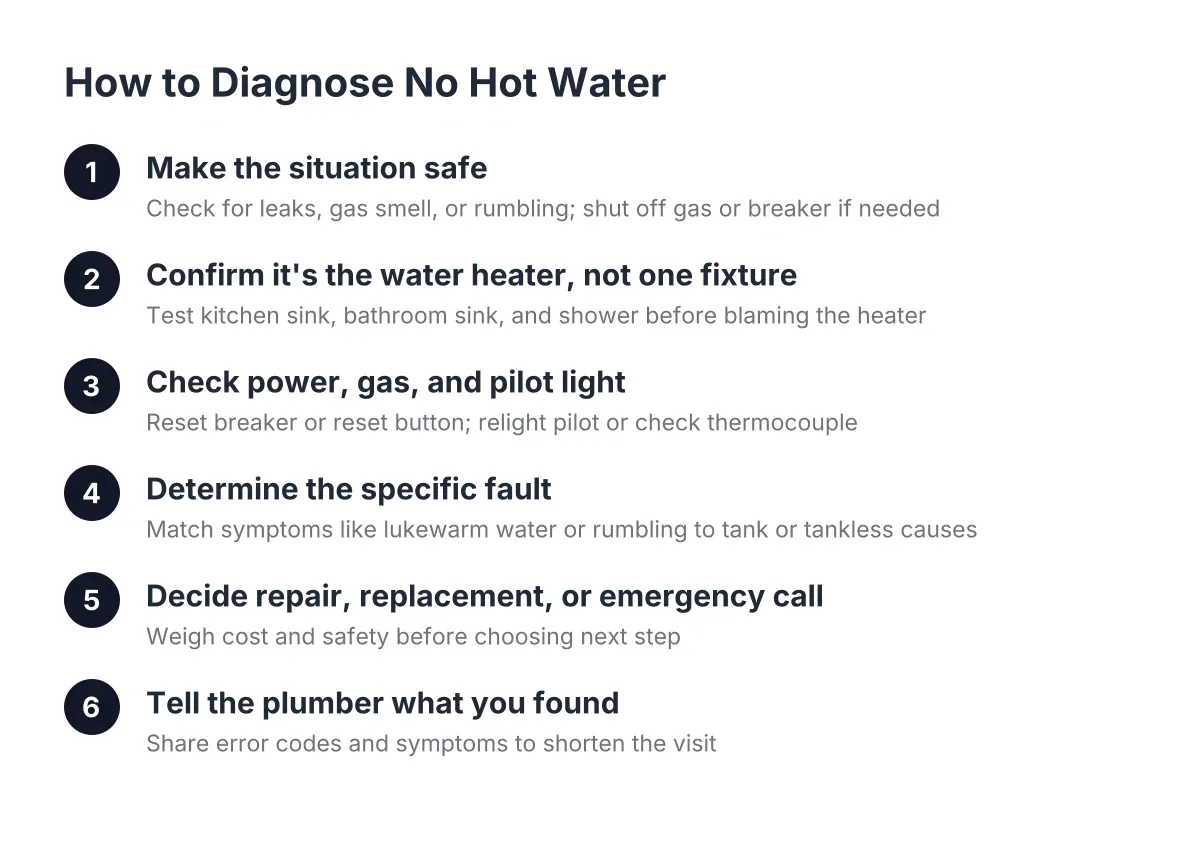
1. First, Figure Out If This Is a Repair Problem or a Tank Problem
Where the water comes from tells you most of what you need to know. Water dripping from a valve, a fitting, or a supply line on top of the unit is usually repairable. Water seeping from the bottom of the tank itself means the inner tank has corroded through, and no repair fixes that. A corroded tank is a replacement, full stop.
This one distinction is worth more than any online cost calculator. According to Alpine Intel, IBHS data shows 69% of all water heater failures result from a slow leak or sudden burst. Therefore, before you search for a water heater repair kit or call anyone, grab a flashlight and find the source of the water. It changes the entire conversation and the entire price range.
If you cannot tell where the leak starts, or water is spreading fast, shut off the cold water supply valve above the heater and treat it as an emergency. That is the honest limit of DIY diagnosis; a licensed plumber should confirm anything involving gas lines, venting, or electrical connections.
2. Know the Repairs That Are Usually Worth Paying For
Some water heater repairs are routine and cheap relative to replacement. If your unit is under eight years old and one of these parts failed, repair is almost always the smarter spend:
- A failed thermostat or heating element on an electric unit
- A bad thermocouple or pilot assembly on a gas unit, the classic "no hot water" call
- A leaking temperature and pressure relief valve
- A corroded supply line or loose fitting at the top of the tank
- A worn drain valve
For example, a Reno homeowner with a five-year-old gas tank water heater and no hot water is usually looking at a thermocouple or gas valve issue. That is a repair measured in hundreds of dollars, not thousands. Paying for that fix and getting several more years from the tank is a good trade.
3. Know the Signs That Replacement Is the Smarter Money
Age changes the math. Most tank water heaters last eight to twelve years, and Reno's mineral-heavy water does them no favors. If your unit is past that window, every repair dollar goes into equipment that is already near the end.
In addition, some symptoms point to replacement no matter the age. Rusty hot water from every tap suggests the tank is corroding from the inside. A rumbling or popping tank means heavy sediment buildup that shortens the tank's life. Water pooling under the tank itself, as covered above, ends the debate entirely.
A useful rule of thumb: if the repair quote is more than half the cost of a new water heater installation, and the unit is past its eighth year, put the money toward replacement. You avoid paying twice, once for the repair and again for the new unit a year later.
4. Water Heater Repair and Replacement Cost Comparison
The core cost comparison comes down to three numbers: the repair quote, the replacement quote, and the remaining life of your current tank. A $300 repair on a four-year-old unit is cheap insurance. The same $300 repair on an eleven-year-old tank is a down payment on a failure you have only postponed.
Replacement costs vary with the type of unit, the fuel source, venting, and whether your setup meets 2026 code requirements for things like expansion tanks and seismic strapping. As a rough illustration, a straightforward tank water heater replacement in the Reno area often lands in the low four figures, while repairs commonly run in the hundreds. Treat those as ballparks, not quotes; the honest number comes after someone looks at your specific setup.
However, there is a cost most homeowners forget: the cost of failure itself. According to Alpine Intel, IBHS estimates water heater failure insurance claims average $4,444 per claim. That figure covers the flooring, drywall, and belongings a burst tank ruins, not the heater. When an old tank sits in a finished basement or above living space, that risk belongs in your math.
5. What Emergency Timing Does to the Price, and What It Should Not Do
An after-hours call costs more than a scheduled visit, and any straight-talking plumber will tell you that up front. You are paying for someone to get out of bed, drive across Reno, and carry parts at midnight. That premium is legitimate. What is not legitimate is a company using your panic to inflate the whole job.
Here is how to protect yourself at 2am without a plumbing background:
- Ask for the after-hours or emergency fee as a specific number before anyone is dispatched.
- Ask whether that fee applies toward the repair if you approve the work.
- Get the diagnosis and the price for the fix before saying yes, even in a 24 hour emergency plumbing situation.
- If the recommendation jumps straight to full replacement with no explanation of what failed, ask them to show you the failed part or the corrosion.
A trustworthy emergency plumber can answer all four questions without flinching. In an Emergency Plumbing situation like a burst pipe or a flooding water heater, containing the damage tonight and pricing the permanent fix in daylight is often the honest path, and a good local company will say so.
6. Where Tankless Fits in the Repair or Replace Decision
If you are replacing anyway, the tank versus tankless question deserves five minutes of thought, not a hard sell. Per the Department of Energy, about 97% of U.S. residential water heaters are traditional storage tank style, according to Alpine Intel, and for most Reno homes a like-for-like tank water heater replacement is the fastest, cheapest path back to hot showers.
That said, tankless earns its higher installation cost in specific situations. The DOE reports that for homes using 41 gallons or less of hot water daily, tankless water heaters can be 24% to 34% more energy efficient than conventional storage tanks, according to Bradford White Water Heaters. A tankless water heater installation costs more up front and may require gas line or venting changes, so the payback depends on your usage.
For a second home in Incline Village or Kings Beach that sits empty for weeks, tankless has a practical appeal beyond efficiency: no 50-gallon tank quietly aging and waiting to fail while nobody is there to notice. For an absentee owner coordinating repairs by phone and text from another state, removing that standing risk is worth pricing out.
7. The Cheapest Option Is the One Almost Nobody Chooses
Maintenance is the boring answer, and it is also the one that beats both repair and replacement on cost. According to ConsumerAffairs, fewer than 20% of homeowners take precautionary steps, such as water heater maintenance, to protect against water damage. That means most people find out about a failing tank the way you may be finding out right now, with water on the floor.
Annual water heater maintenance is simple: flush the sediment, test the pressure relief valve, check the anode rod, and inspect supply lines for corrosion. In Reno's hard water, sediment builds fast, and a yearly flush meaningfully extends tank life. For Tahoe-area second homes, a maintenance check during pre-season opening catches slow leaks before they run for weeks unwatched.
Think of it this way. A maintenance visit costs a fraction of a repair. A repair costs a fraction of a replacement. Additionally, a replacement costs a fraction of a water damage claim. Every step you take earlier on that ladder saves you the steps below it.
How to Decide on Water Heater Repair or Replacement Tonight
When you strip away the panic, the water heater repair replacement decision comes down to three questions you can answer before anyone arrives:
- How old is the unit? Under eight years leans repair. Over ten leans replacement. Check the serial number sticker; the manufacture date is encoded there.
- Where is the water coming from? Fittings and valves lean repair. The tank body itself means replacement.
- What does failure cost you? A tank in a garage with a floor drain is a low-stakes gamble. A tank above finished space, or in a vacation home nobody checks for weeks, is not.
If two of the three answers point the same direction, you have your decision. Then the emergency call becomes simpler, because you are asking a plumber to confirm your read and quote a number, not to make the decision for you at 2am.
No hot water is miserable, and a leaking tank is scary. Nevertheless, the money side of this problem is more predictable than it feels in the moment. Know the age, find the leak, ask for the after-hours fee in plain numbers, and the rest is just plumbing.